Two Tools, One Goal: Know What Works
Marketers use UTM parameters and link shorteners to answer the same question—did this campaign drive traffic? They work differently, and the best approach is often to use them together rather than treat them as substitutes.What UTM Parameters Do
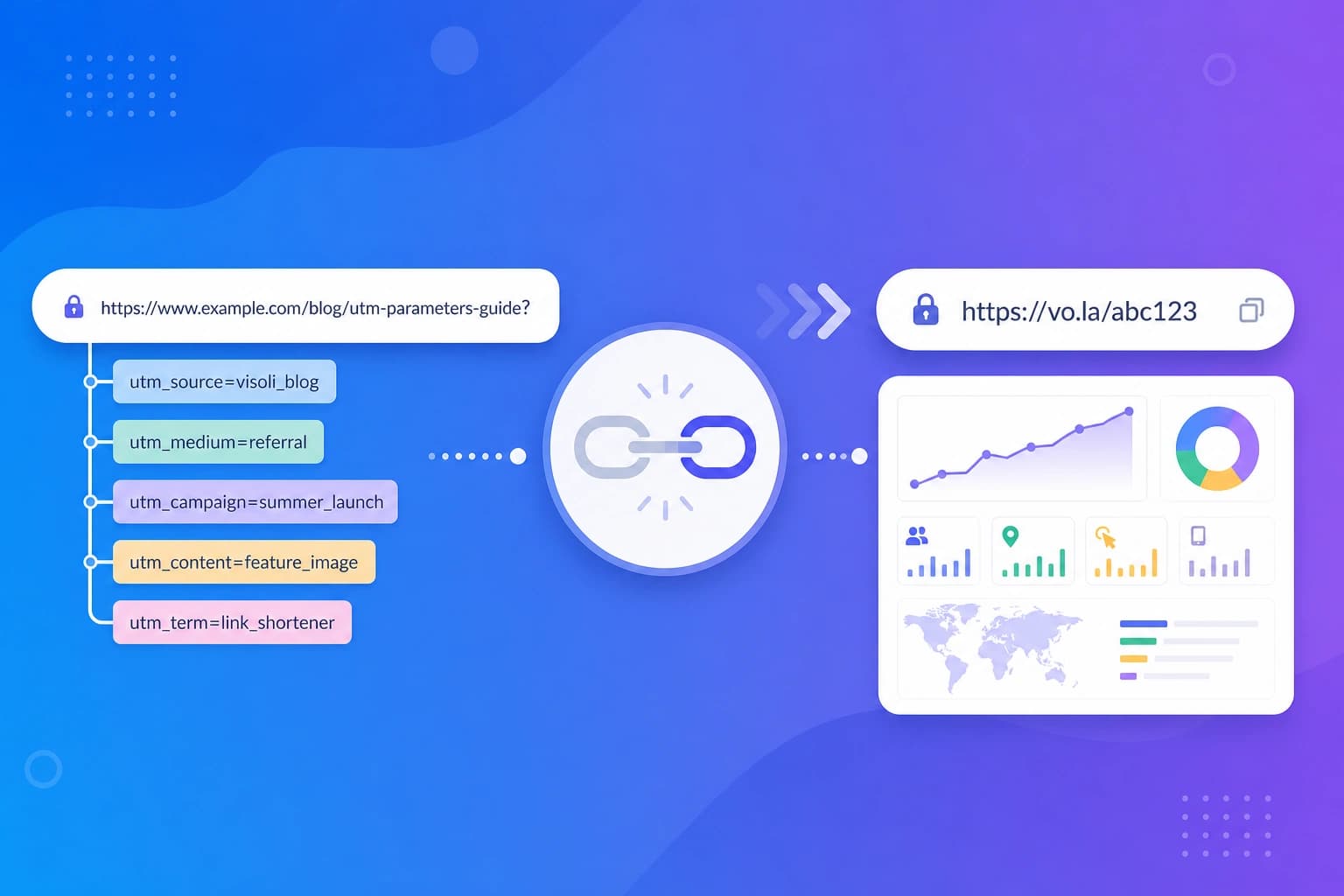
UTM parameters are tags appended to a URL. Common ones include:- utm_source — Where the traffic came from (e.g. newsletter, facebook)
- utm_medium — The channel type (e.g. email, social, cpc)
- utm_campaign — The specific campaign name (e.g. spring_sale)
Strengths of UTMs
- Standard format recognized by analytics tools
- Granular campaign naming inside Google Analytics
- No third-party redirect required if you share the full URL
Limitations of UTMs
- Long, ugly URLs that reduce trust and click-through
- No first-party click data if the user never reaches your site
- Hard to manage when sharing on character-limited platforms
What Link Shorteners Add
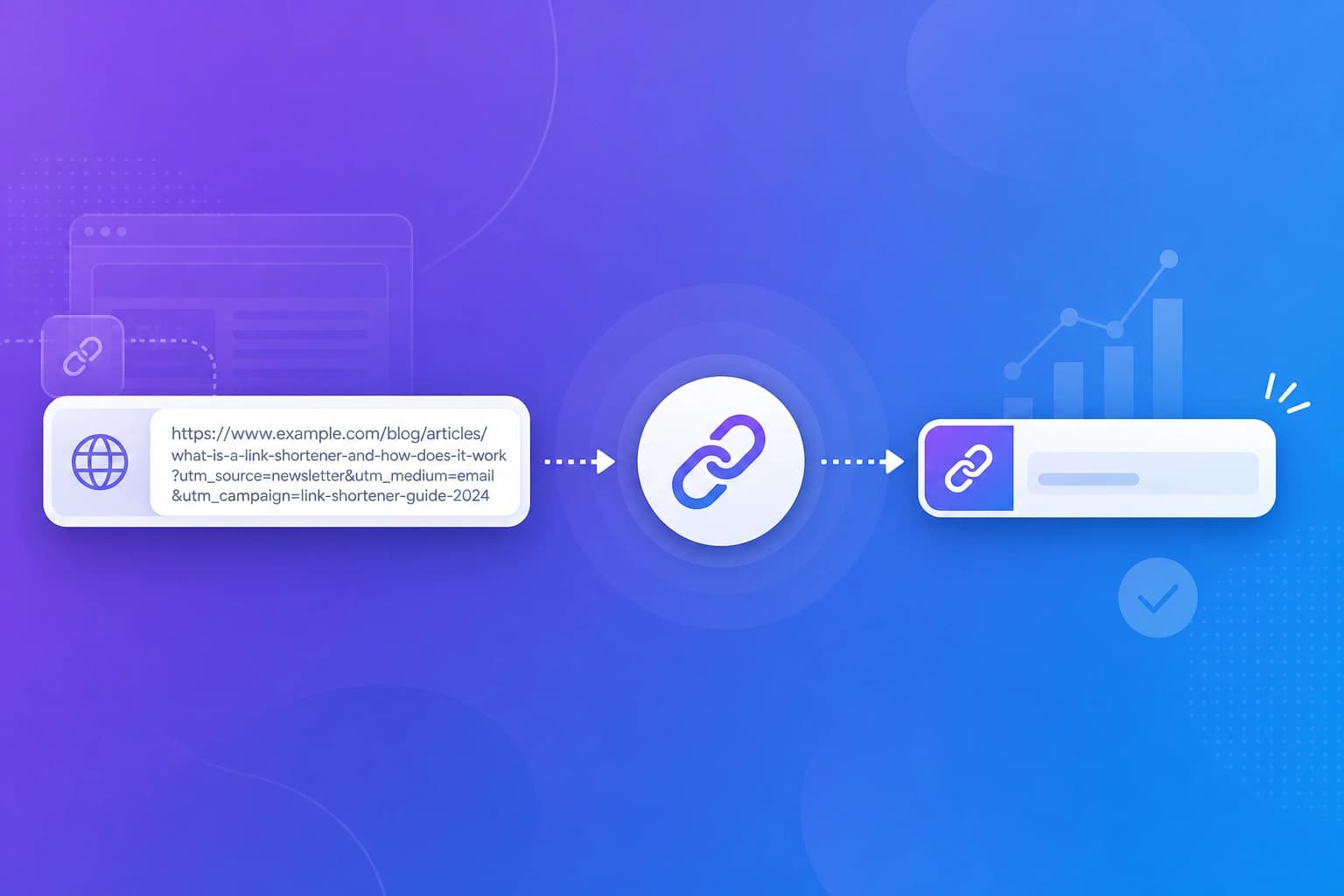
A link shortener wraps your destination URL—including UTM parameters—in a clean, shareable link. Every click passes through the shortener first, which records visit data before redirecting.Strengths of Link Shorteners
- Clean, professional URLs for social, email, and print
- First-party click analytics (counts, geography, referrers, devices)
- QR code generation from the same link
- CSV export for reporting outside the dashboard
Limitations of Link Shorteners
- Adds a redirect hop (minimal latency on reliable services)
- Analytics live in the shortener unless UTMs also reach your site
Use Together, Not Either/Or
The most effective setup combines both:- Build your destination URL with UTM parameters for Google Analytics.
- Paste that full URL into a link shortener to get a clean short link.
- Share the short link across channels.
- Review click data in the shortener and session data in GA4.
Common Mistakes to Avoid
- Sharing raw UTM URLs on social media — Long links look spammy; shorten them.
- Skipping UTMs behind short links — You lose GA campaign attribution on your site.
- One link for every channel — Use unique short links per platform to compare referrers.
- Inconsistent naming — Define UTM conventions before launching campaigns.